
The rainy season brings relief from heat, but it also increases the risk of infections among children. Schools remain active, outdoor play continues, and daily routines often get disrupted due to wet weather. For parents, this becomes a crucial time to ensure their child stays healthy, active, and protected from seasonal illnesses.
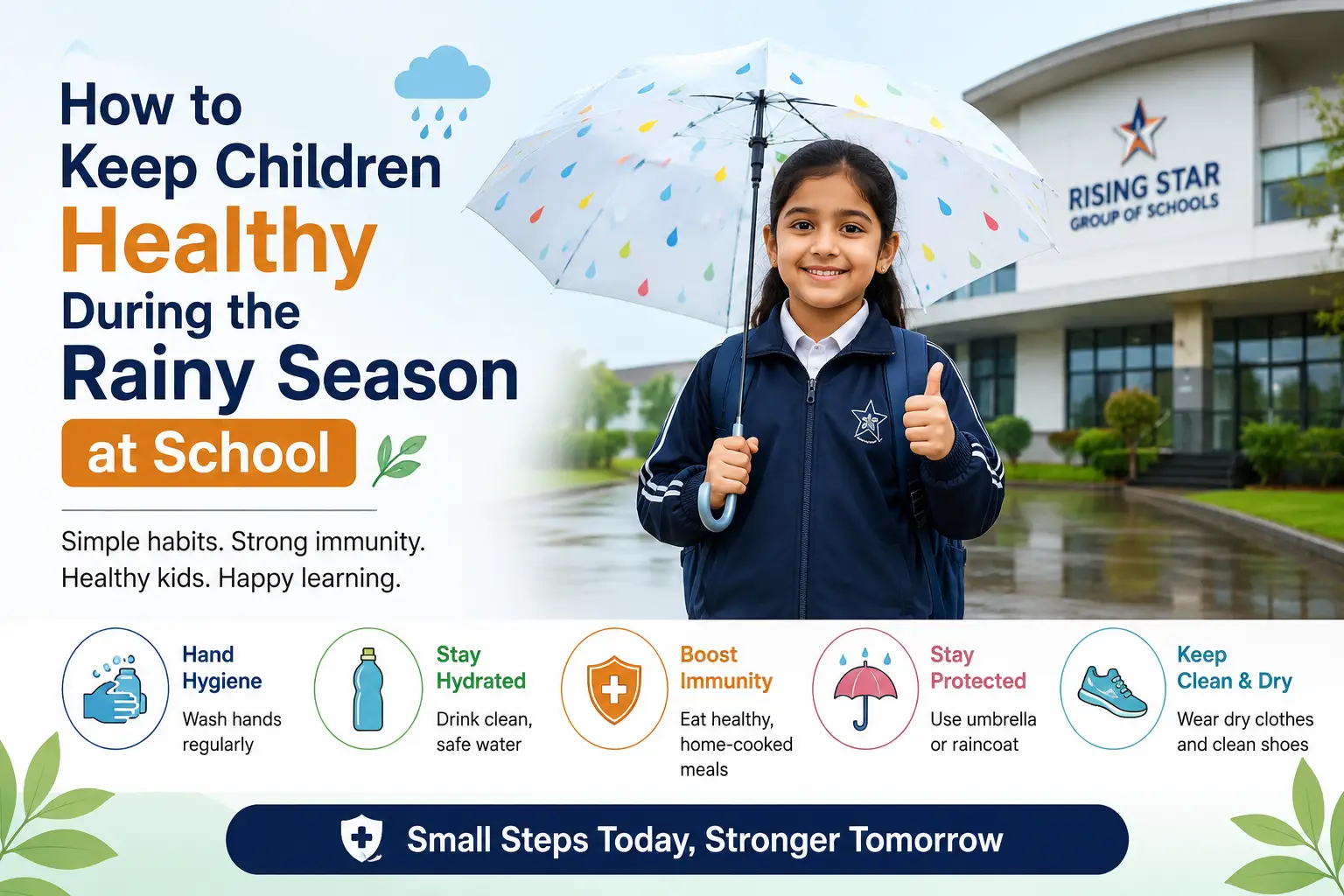
Children are naturally more exposed to infections during monsoon because their immunity is still developing. Common issues like cold, cough, viral fever, stomach infections, and skin allergies tend to rise during this period. However, with the right care at home and awareness about hygiene at school, these problems can be easily managed.
At institutions like the Rising Star Group of Schools, which operates across Wagholi, Hinjewadi, and Kesnand, student well-being is always prioritized. But health during the rainy season is a shared responsibility between schools and parents.
This blog will guide parents through simple, practical, and effective ways to keep children healthy during monsoon while supporting their learning, development, and daily school life smoothly.
Table of Contents
- Understanding Monsoon Health Risks for Children
- Building Strong Immunity Through Daily Diet
- Importance of Hygiene Habits at Home and School
- Clothing and Protection During Rainy Season
- Safe Food and Water Practices
- Managing Common Monsoon Illnesses
- Role of Schools in Child Health Safety
- Parent Tips Box
- Common Mistakes to Avoid
- Frequently Asked Questions
- Key Takeaways
- Conclusion
1. Understanding Monsoon Health Risks for Children
The rainy season creates an environment where bacteria and viruses spread more easily. Damp surroundings, waterlogging, and fluctuating temperatures contribute to infections.
Children are especially vulnerable because:
- They spend time in group settings like classrooms and playgrounds
- They often forget basic hygiene practices
- Their immune systems are still developing
In cities like Pune, including Wagholi, Hinjewadi, and Kesnand, schools observe a rise in seasonal illnesses during monsoon. Understanding these risks helps parents take early preventive steps instead of reacting after the child falls sick.
2. Building Strong Immunity Through Daily Diet
A strong immune system is the first defense against monsoon diseases. Parents should focus on balanced meals rather than heavy or oily food.
Healthy food choices include:
- Fresh seasonal fruits like apples, bananas, and pomegranates
- Warm homemade soups and khichdi
- Protein-rich foods like eggs, dal, and paneer
- Herbal drinks like tulsi or ginger water (in moderation)
Foods to limit:
- Street food during rainy days
- Excess fried snacks
- Cold drinks and packaged sugary items
A simple example: replacing fried evening snacks with vegetable soup can significantly reduce digestive issues in children.
Schools like Rising Star Group of Schools also encourage healthy eating habits as part of holistic education and child development.
3. Importance of Hygiene Habits at Home and School
Hygiene is the most effective way to prevent infections during the rainy season.
Teach children these habits:
- Wash hands before and after meals
- Use hand sanitizer when water is not available
- Avoid touching face frequently
- Keep nails trimmed and clean
At home:
- Clean school bags and lunch boxes regularly
- Dry wet shoes and uniforms properly
- Ensure bathrooms are clean and dry
At school:
CBSE institutions like a CBSE School in Wagholi or CBSE School in Hinjewadi ensure regular sanitation, but parents must reinforce habits at home for better results.
Good hygiene habits support long-term student growth and quality education.
4. Clothing and Protection During Rainy Season
Proper clothing plays a big role in preventing seasonal illnesses.
What children should wear:
- Light, breathable cotton clothes
- Waterproof raincoats or jackets
- Comfortable waterproof footwear
- Extra pair of socks and uniforms in school bags
Wet clothes should never be worn for long hours. Parents should always send an extra set of clothing during heavy rain days.
5. Safe Food and Water Practices
Contaminated food and water are major causes of illness during monsoon.
Safety tips:
- Always send boiled or filtered drinking water
- Pack freshly cooked home meals
- Avoid cutting fruits too early before consumption
- Use clean, dry lunch boxes
A common issue in Pune schools is food spoilage due to humidity. Parents can avoid this by using insulated lunch boxes.
6. Managing Common Monsoon Illnesses
Despite precautions, children may still fall sick. Early management is important.
Common illnesses:
- Cold and cough
- Viral fever
- Stomach infections
- Skin rashes
What parents should do:
- Keep the child hydrated
- Provide light, warm meals
- Ensure proper rest
- Avoid sending sick children to school
If symptoms persist, consult a doctor immediately.
7. Role of Schools in Children Healthy Safety
Schools play a key role in maintaining a safe environment during monsoon.
At institutions like Rising Star Group of Schools, health awareness is integrated into daily routines.
School-level measures include:
- Regular classroom cleaning
- Sanitization of washrooms
- Safe drinking water facilities
- Awareness sessions on hygiene
- Monitoring student health
CBSE schools across Pune ensure that learning continues without compromising safety. This balance supports holistic education and child development.
Parent Tips Box
- Always pack an extra set of clothes in rainy season
- Encourage daily warm meals instead of cold snacks
- Check school shoes for moisture daily
- Keep basic medicines only as advised by doctors
- Teach children to avoid playing in stagnant water
- Maintain consistent sleep schedules
Common Mistakes to Avoid
- Ignoring early symptoms like mild fever or cough
- Sending children to school in wet clothes
- Allowing frequent outside food consumption
- Skipping handwashing habits
- Overdressing children, causing sweating and discomfort
- Not cleaning school bags and lunch boxes regularly
Frequently Asked Questions
1. How can parents protect children from infections during monsoon?
By maintaining hygiene, providing healthy food, ensuring clean water, and teaching regular handwashing habits.
2. What food is best for children in rainy season?
Warm, home-cooked meals like soups, khichdi, fruits, and protein-rich foods are best.
3. Should children avoid going to school during rain?
No, but they should be properly dressed and follow hygiene practices. Schools also ensure safety measures.
4. How does school hygiene help during monsoon?
Clean classrooms, safe water, and sanitation reduce the spread of infections significantly.
5. What are common rainy season illnesses in children?
Cold, cough, viral fever, stomach infections, and skin allergies are most common.
6. How important is immunity for children in rainy season?
Strong immunity helps children fight infections and recover faster from seasonal illnesses.
7. How do CBSE schools support child health?
CBSE schools focus on hygiene, awareness programs, and overall student well-being.
8. Which is the Best School in Pune for child safety?
Parents often look for schools that prioritize hygiene, safety, and holistic education like Rising Star Group of Schools.
Conclusion
The rainy season brings both joy and challenges for parents. While children enjoy the weather, it is important to ensure their safety from common infections. With proper hygiene, balanced nutrition, and awareness, parents can easily protect their children during this time.
Schools across Wagholi, Hinjewadi, and Kesnand also play an important role in maintaining safe learning environments. When both parents and schools work together, children can enjoy a healthy and productive academic experience throughout the monsoon season.
If you’re looking for a nurturing environment where your child can grow academically, socially, and emotionally, Rising Star Group of Schools offers holistic education through its campuses in Wagholi, Hinjewadi, and Kesnand. Contact us today to learn more about admissions and schedule a campus visit.